Menopause & Depression: What Science Shows About the Connection

H. Ali, PhD
H. Ali, PhD
January 12, 2025
5
min read
Technically reviewed by: 
Diagnox Staff
Menopause & Depression: What Science Shows About the Connection
Listen to this article

Menopause isn’t just about hot flashes and irregular periods — it can also affect mental health. Many women report mood swings, anxiety, or depressive symptoms during perimenopause and post-menopause. Understanding what’s happening inside can help differentiate what’s “normal” for this life stage and when to pay closer attention.


Why Menopause Can Influence Mood

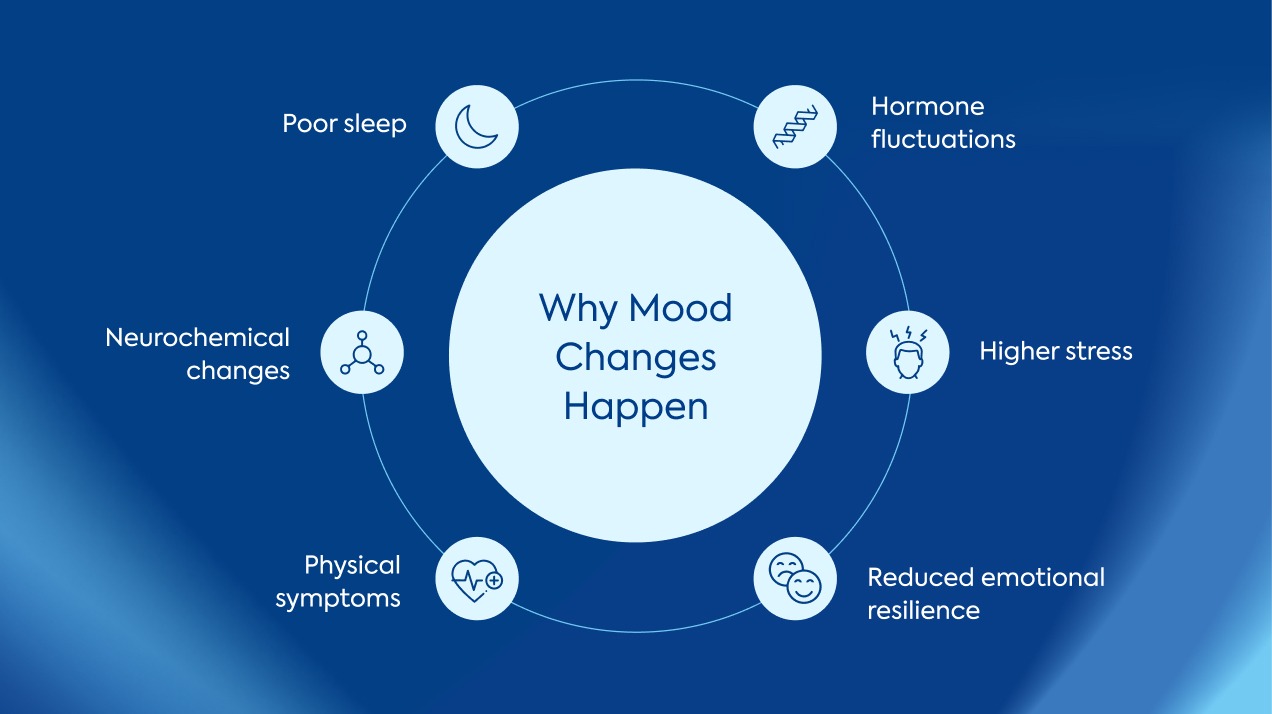
1. Hormonal Fluctuations Affect Brain Chemistry

As estrogen levels drop, the balance of neurotransmitters that regulate mood, including serotonin and GABA, can shift. This may increase susceptibility to depressive symptoms or anxiety during menopause. [1][2]

2. Menopausal Transition Is Linked to Higher Risk of Depression

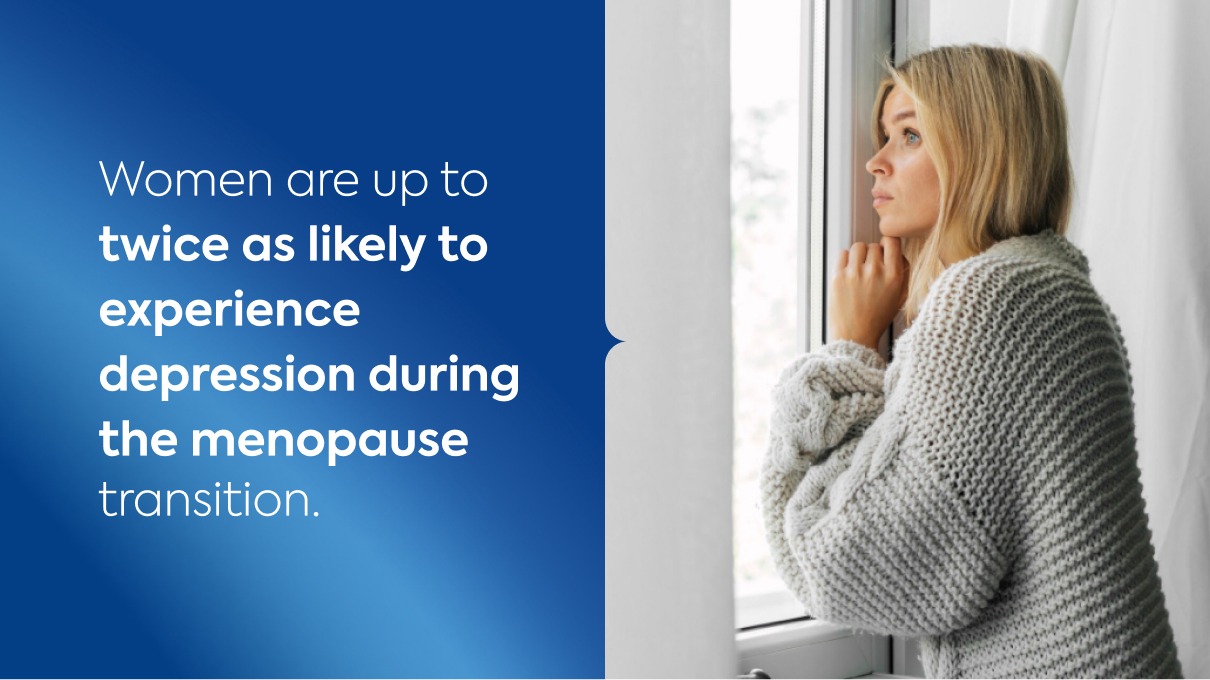
Recent large-scale reviews and cohort studies report that the risk of depression and anxiety is higher during the perimenopausal and early post-menopausal phases than before menopause. [3][4]

3. Sleep Disturbances, Hot Flashes & Other Symptoms Add to Psychological Stress

Many menopausal symptoms, like hot flashes, night sweats, and disrupted sleep, overlap with known risk factors for mood disorders. Poor sleep quality alone can worsen mood regulation and emotional resilience. [5][6]

4. Emotional and Social Stressors Can Amplify the Impact

Life changes often accompany mid-life: aging parents, career shifts, changing family roles, and more. When combined with biological vulnerability during menopause, these stressors may increase the risk for depression or anxiety. [2][6]

Who Is Most Vulnerable

Research indicates some patterns:

  • Women in perimenopause and early post-menopause have higher rates of depression compared with pre-menopausal women. [4][3]

  • Those with a history of depression or anxiety are more likely to experience mood disturbances during menopause. [2][5]

  • Women dealing with severe vasomotor symptoms (hot flushes, night sweats), poor sleep, or high psychosocial stress may also be at greater risk. [5]

Clear information is the most valuable resource you can have on your side.
Stay in the loop!
Thank you for subscribing. Stay informed, stay healthy!
Oops! There was a problem with your submission. Please check your email address and try again.

How to Monitor & Respond: At-Home Tools + Lifestyle Strategies

Because symptoms and risk vary widely, a holistic and personalized approach tends to work best. Here are some helpful steps:

Check Where You Are in Menopause

The Diagnox Menopause Stage Indicator can help you track hormone changes via FSH levels, giving insight into whether you’re in perimenopause, early menopause, or later stages.


Prioritize Sleep & Routine

Good sleep hygiene, consistent sleep schedule, cool and dark bedroom, limiting stimulants, helps mitigate mood swings and emotional stress.

Support Mood with Nutrition and Lifestyle

Foods rich in omega-3, antioxidants, and magnesium can support brain health. Regular movement, balanced diet, and stress-management practices (like mindfulness or light activity) also help.

Learn What’s Normal vs. What’s Concerning

Understanding that mood shifts during menopause can be part of the transition helps you approach symptoms with curiosity instead of panic. For example, read related Diagnox content like “Is It Perimenopause or Something Else?” for more context.

Check Overall Wellness

Sometimes mood changes are linked not only to hormonal shifts but to broader health factors, hydration, inflammation, sleep, or stress. Diagnox tests like Urinox-10 or Hydration Test Strips may help you monitor overall wellbeing.

When to Consider Professional Support

If mood changes are severe, persistent, or disrupt daily life, especially if you have a history of depression or anxiety, it’s worth consulting a healthcare provider. Hormonal shifts can make the mind more sensitive, so early support can help you manage symptoms and find tailored strategies.

Important Takeaways

  • Menopause can make many women more vulnerable to depressive symptoms, especially during the transition years [4][1].

  • The drop in estrogen disrupts brain chemistry and emotional regulation [1][5].

  • Sleep, lifestyle, and personal history influence how strongly someone is affected.

  • At-home hormone tracking and wellness monitoring can help you stay alert to changes.

  • Self-care, awareness, and early screening help women navigate this transition with knowledge and resilience, not fear.

References

[1] Alblooshi, S., et al. (2023). Does menopause elevate the risk for developing depression and anxiety? Review of 22 studies.
[2] Albert, K. M., et al. (2019). Estrogen, stress and depression: neurobiological mechanisms.
[3] Badawy, Y., et al. (2024). The risk of depression in the menopausal stages.
[4] Hawkins, S. S., et al. (2025). Associations Between Menopause and Depression. J
[5] The American College of Obstetricians and Gynecologists (ACOG). Mood changes during perimenopause are real. (2024).
[6] Frontiers in Psychiatry. (2024). The intersection between menopause and depression.

About the Author
H. Ali, PhD

Hussnain Ali received his Ph.D. degree in EE in 2015 from the University of Texas at Dallas, USA. He is the co-founder and the Chief Executive Officer (CEO) at Diagnox Health, Plano, TX 75024, USA, and a visiting research scientist at the University of Texas at Dallas. His academic and industry experience spans over 15 years in organizations like the Center for Advanced Research in Engineering, The University of Texas at Dallas, and Harman/Samsung. He has served as a co-PI on an RO1 grant from the National Institutes of Health (NIH). His research interests include biomedical devices, auditory rehabilitation, and cochlear implants. He has authored and co-authored over 70 international publications and has been awarded multiple US patents. His latest work at Diagnox encompasses the development of innovative healthcare and wellness products/solutions that provide convenient and affordable at-home screening/diagnosis. He aims to bridge conventional clinical diagnostic products with Artificial Intelligence (AI) and contemporary data-centric technologies to modernize the healthcare and wellness industry.

About the Reviewer
This blog was
Technically reviewed by: 
Diagnox Staff

Diagnox Staff consists of a multidisciplinary team of scientists, content writers, and healthcare professionals with an expertise to create and review high-quality, informative, accurate, and easy-to-understand content for both professionals and everyday readers. Our staff follows strict guidelines to ensure the credibility and authenticity of the information, reviewing them independently and verifying them by various scientific and technical sources to ensure accuracy. Our review team believes in delivering knowledge free from bias to improve public health and well-being.

Have a Question?

Questions are great. Drop us a note and we promise to get back to you soon.

Thank you! Your question has been received.
We will respond to you promptly.
Oops! Something went wrong while submitting the form. Kindly try again.
If the problem persists, please drop us an email at contact@diagnoxhealth.com