


How Just 2% Dehydration Can Cut Productivity by 25%

H. Ali, PhD
H. Ali, PhD
November 27, 2025
4
min read
Technically reviewed by: 
Diagnox Staff
How Just 2% Dehydration Can Cut Productivity by 25%
Listen to this article

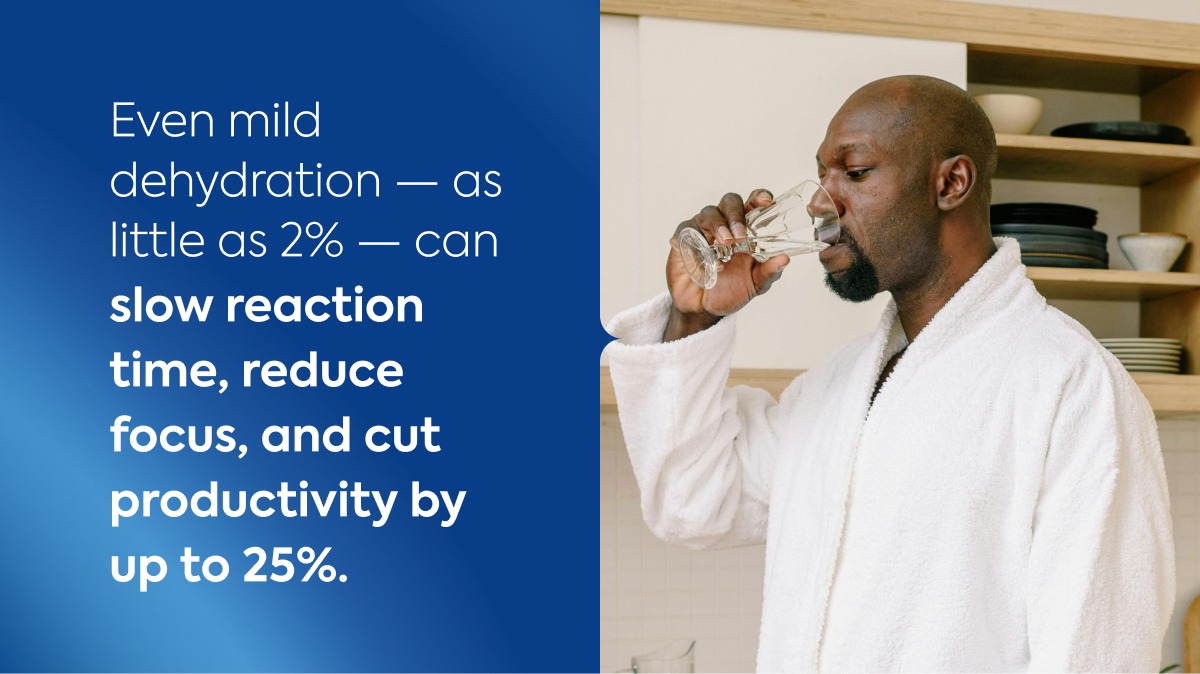
Dehydration doesn’t always look dramatic. You may not feel thirsty or tired, and you may not notice anything obvious happening. But research shows that even 2% dehydration can impact how clearly you think, how fast you react, and how efficiently you work. Several studies found that losing just a small amount of body water can reduce cognitive performance by approximately 20–25% [1][2].

This level of dehydration is common. It can happen after a morning coffee, a long meeting without water, a workout, or even mild heat exposure. And because the brain is nearly 75% water, dehydration affects it faster and more dramatically than most people expect [3].

The good news: hydration is one of the easiest wellness habits to monitor and improve. Tools like the Diagnox Hydration Test Strips let you check your fluid levels in seconds using urine specific gravity.


Why a 2% Drop Has Such a Big Impact

When the body loses water, even a small amount, several things happen inside the brain:

1. Blood Flow to the Brain Decreases

MRI studies show that dehydration reduces cerebral blood volume and makes neural communication less efficient [4]. This affects reaction time, focus, and problem-solving.

2. Cognitive Errors Increase

A study published in Journal of Nutrition found that even mild dehydration worsened working memory, attention, and mood, especially in women [1].

3. Stress Hormones Rise

Dehydration increases cortisol levels, which can make tasks feel mentally heavier and decrease motivation [5].

4. Energy Metabolism Slows Down

Water is required for ATP production. When hydration drops, the body’s energy process becomes less efficient, resulting in more fatigue and slower thinking [3]. This is how a tiny change in hydration can lead to a 25% drop in productivity, without any dramatic symptoms.

What Does 2% Dehydration Actually Look Like?

It’s easier to reach 2% dehydration than most people think. For a 60–70 kg person, this equals:

Just 1 to 1.5 liters of water loss

You can lose this amount through:

• a morning gym session
• working in a warm office
• drinking coffee without water
• long periods of talking
• being outside in mild heat
• skipping water until the afternoon
• working at a computer for hours without breaks

This level of dehydration often feels normal, but your body is working harder to maintain cognitive performance [2].

Clear information is the most valuable resource you can have on your side.
Stay in the loop!
Thank you for subscribing. Stay informed, stay healthy!
Oops! There was a problem with your submission. Please check your email address and try again.


Why Productivity Drops When Hydration Falls

When water levels drop, the brain compensates by working harder. This leads to:

• slower processing
• increased mental fatigue
• difficulty focusing
• irritability
• more mistakes
• decreased problem-solving efficiency
• lower motivation

Harvard researchers found that dehydration affects the prefrontal cortex, responsible for planning, attention, and decision-making [6]. This is why hydration isn’t just a physical-health metric. It’s a performance metric.

What About Coffee, Tea, and Energy Drinks?

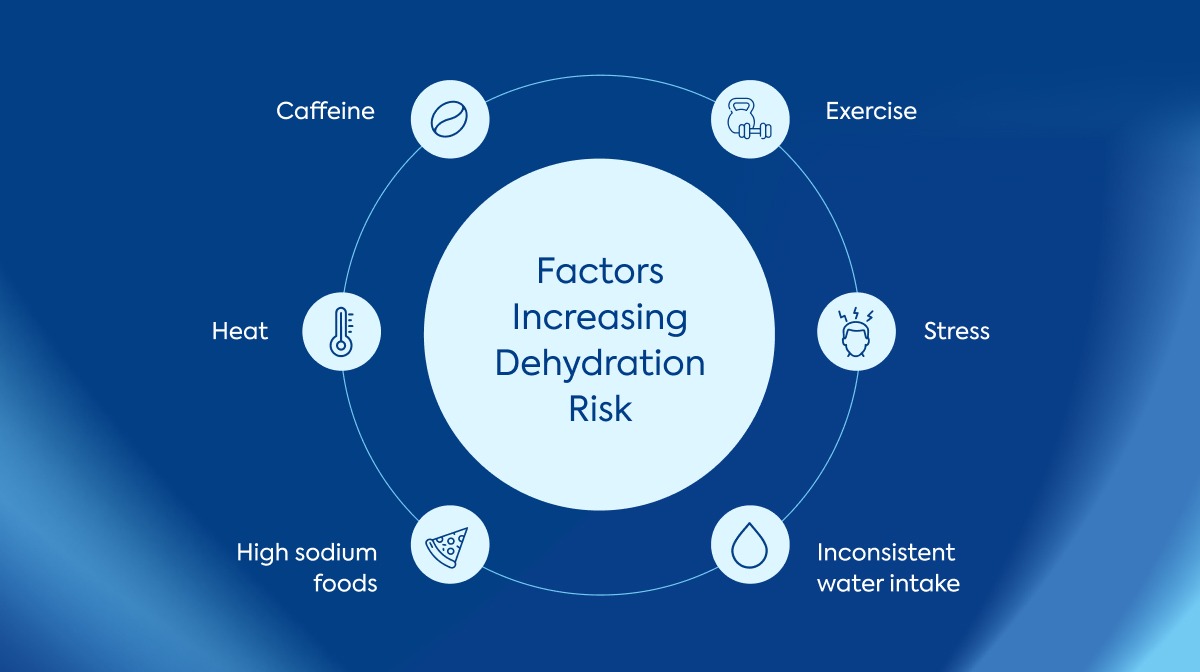
Caffeine is mildly diuretic, so drinks like coffee, matcha, soda, and energy drinks can increase water loss. While they still contribute to hydration, relying on them without drinking water can push you toward mild dehydration faster. High-sodium foods also increase your body’s need for water.

How to Check Your Hydration Level

Thirst is not a reliable indicator, even at 2% dehydration, people often don’t feel thirsty yet [2]. A better approach is checking urine specific gravity (USG), a widely used biomarker for hydration levels in sports, medicine, and research. The Diagnox Hydration Test Strips provide a simple, at-home way to understand USG and track your hydration trends over time.

Related products for broader health context:
Urinox-10 → screens 10 parameters including ketones, pH, and leukocytes
Protein Urine Test → hydration also affects protein concentration

How to Stay Hydrated Without Overthinking It

Here are practical tips backed by research:

1. Start your morning with water

You wake up naturally dehydrated.

2. Drink consistently throughout the day

Not all at once.

3. Balance caffeine with water

One cup of water for every caffeinated drink.

4. Eat water-rich foods

Fruits, vegetables, soups, yogurt, greens.

5. Monitor hydration if you exercise or live in warm environments

6. Check your hydration level regularly

USG testing makes patterns easy to spot.

For more hydration lifestyle guidance, read Understanding Hydration.

Conclusion

Just 2% dehydration can cut your productivity by up to 25% [1][2]. It affects mood, energy, memory, and concentration, even when you feel “fine”.

At-home hydration testing helps you stay ahead by giving you a clear picture of how your daily habits, caffeine intake, and environment affect your hydration status. Small improvements in hydration can make a meaningful difference in clarity, comfort, and performance.

Disclaimer

This article is for educational purposes only and does not diagnose or treat medical conditions. If you experience persistent symptoms of dehydration or health concerns, consult a qualified healthcare provider.

References

[1] Ganio, M.S. et al. (2011). Mild dehydration impairs cognitive performance and mood in young women. Journal of Nutrition.

[2] Cian, C. et al. (2001). Influence of mild dehydration on cognitive performance. European Journal of Applied Physiology.

[3] Mayo Clinic. (2024). Dehydration and brain function.

[4] Kempton, M. et al. (2011). MRI studies of dehydration and brain function. Human Brain Mapping.

[5] Armstrong, L.E. (2012). Dehydration and stress hormone impact.

[6] Harvard Health Publishing. (2023). Hydration and cognitive performance.

About the Author
H. Ali, PhD

Hussnain Ali received his Ph.D. degree in EE in 2015 from the University of Texas at Dallas, USA. He is the co-founder and the Chief Executive Officer (CEO) at Diagnox Health, Plano, TX 75024, USA, and a visiting research scientist at the University of Texas at Dallas. His academic and industry experience spans over 15 years in organizations like the Center for Advanced Research in Engineering, The University of Texas at Dallas, and Harman/Samsung. He has served as a co-PI on an RO1 grant from the National Institutes of Health (NIH). His research interests include biomedical devices, auditory rehabilitation, and cochlear implants. He has authored and co-authored over 70 international publications and has been awarded multiple US patents. His latest work at Diagnox encompasses the development of innovative healthcare and wellness products/solutions that provide convenient and affordable at-home screening/diagnosis. He aims to bridge conventional clinical diagnostic products with Artificial Intelligence (AI) and contemporary data-centric technologies to modernize the healthcare and wellness industry.

About the Reviewer
This blog was
Technically reviewed by: 
Diagnox Staff

Diagnox Staff consists of a multidisciplinary team of scientists, content writers, and healthcare professionals with an expertise to create and review high-quality, informative, accurate, and easy-to-understand content for both professionals and everyday readers. Our staff follows strict guidelines to ensure the credibility and authenticity of the information, reviewing them independently and verifying them by various scientific and technical sources to ensure accuracy. Our review team believes in delivering knowledge free from bias to improve public health and well-being.

Have a Question?

Questions are great. Drop us a note and we promise to get back to you soon.

Thank you! Your question has been received.
We will respond to you promptly.
Oops! Something went wrong while submitting the form. Kindly try again.
If the problem persists, please drop us an email at contact@diagnoxhealth.com