



.jpg)


.jpg)




What New Studies Are Finding About Mood
Several recent studies are shedding light on how ketosis may affect emotional well-being. A 2024 cross-sectional study found that people following a ketogenic diet reported higher calmness, better alertness, and lower stress levels compared with people eating other types of diets [2]. These effects weren’t dramatic or instant, but the trend was consistent. Another 2024 case series followed adults using a well-structured ketogenic diet and found significant improvements in depressive and anxiety symptoms over 7–12 weeks [3]. In these cases, ketone tracking was part of the process, helping people stay in stable ketosis.
A broader 2025 systematic review and meta-analysis went a step further: across dozens of studies, ketogenic diets were associated with measurable improvements in depressive symptoms, especially when ketosis was confirmed through testing [4]. While anxiety improvements were less consistent, the overall picture suggests that ketosis may have a meaningful impact on mood regulation. Even early research in bipolar disorder showed promising links between higher daily ketone levels and improved mood stability, including less impulsivity and anxiety [5]. While more research is needed, especially large, long-term trials, the evidence is steadily growing.
Why Consistency Matters
One theme that appears again and again in research is consistency. It’s not just whether someone is “doing keto.” It’s whether they are actually in ketosis, and whether their ketone levels stay stable throughout the day. When ketone levels are steady, the brain receives a more reliable fuel supply. This can support smoother energy, more balanced thinking, and fewer emotional peaks and dips. But when ketone levels rise and fall dramatically, your brain feels that shift too.
This is where at-home testing becomes part of the process.
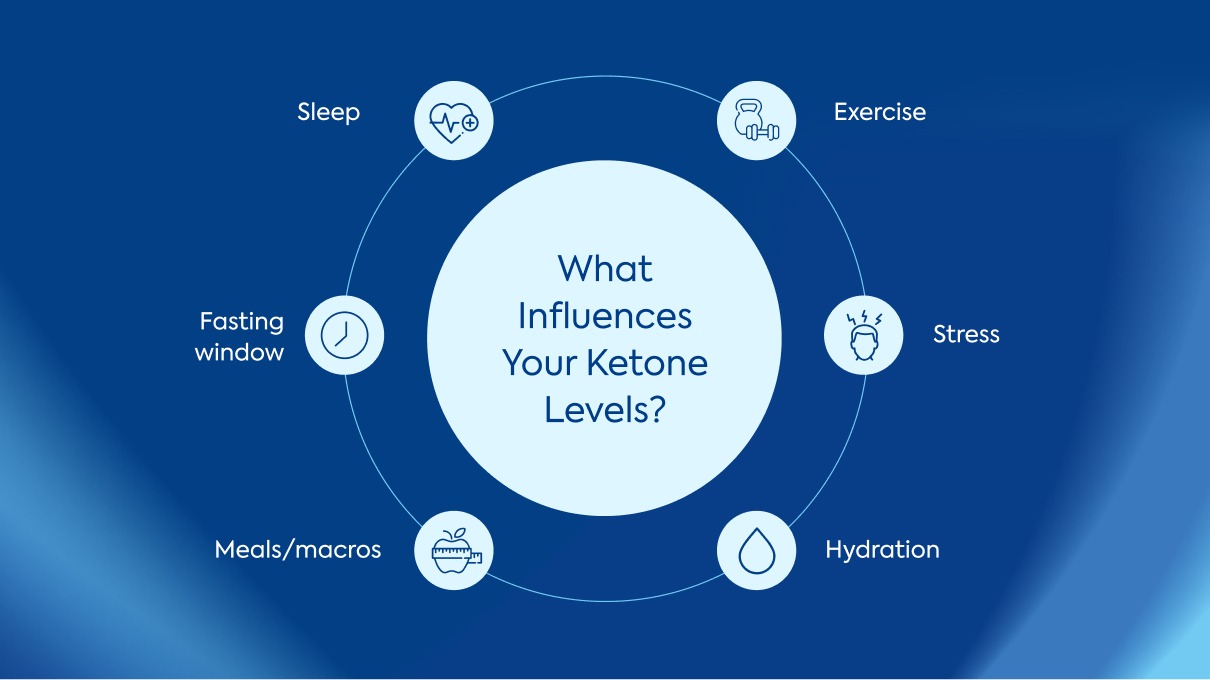
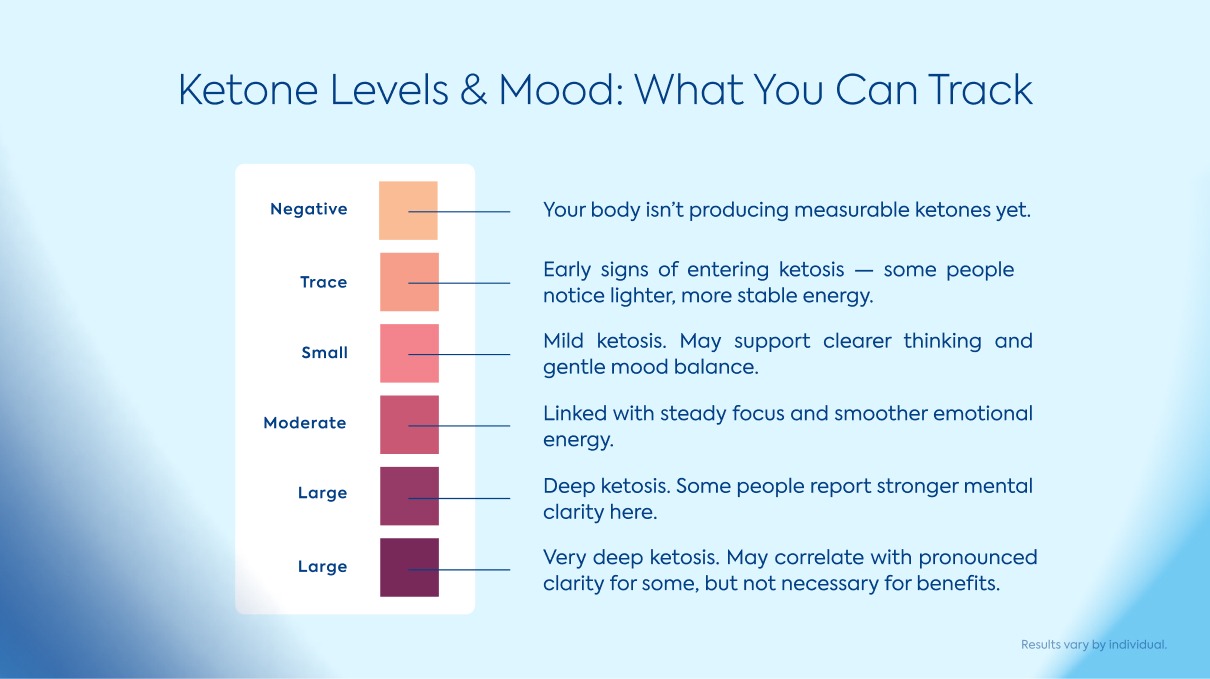
Simple urine ketone tests let you check whether you’re in negative, trace, small, moderate, or large ketosis, and those readings help you understand how your body responds to meals, stress, sleep, hydration, and activity. For many people, these small daily checks create a clearer picture of what actually supports their mental clarity and mood while on keto. It turns “guessing” into something more intentional and informed.
Tools like the Diagnox Ketone Test Strips make it possible to track your levels in seconds, right at home, without equipment or blood testing.

Final Thoughts
Ketosis isn’t just about weight loss or metabolic health. There’s a growing body of research showing that ketones may support mood, mental clarity, emotional balance, and cognitive function, especially when ketosis is steady and intentional. For anyone exploring the ketogenic lifestyle, checking your ketone levels can offer useful insights into how your body responds and why you feel the way you do on certain days. It’s one of the simplest ways to personalize your experience. When you understand your ketone levels, you understand your body better. And that’s a powerful step toward thoughtful, informed wellness.